
Receive the Reason to Work
.png)
Receive the Reason to Work
Receive the Reason to Work
Receive the Reason to Work
Working for ultimate reasons is the only way to have lasting joy, fulfillment, and satisfaction. This reason to work is something you can earn. You can’t “do in order to get” this purpose. It’s also something you’re not going to feel a burden about having to do once you accept it. The chief reason for work is offered to you for free. To obtain it you must receive it.
Receive the Reason to Work
The better the reason for work, the more satisfying, meaningful, and fulfilling your work will be.
Reason is more than logic. Reason is purpose.
Simon Sinek has been telling us to find our “why” for almost two decades. Unfortunately, most people focus on what they’re doing and where they’re doing it instead of the reason for their work. Even worse, many people are working for the wrong reasons. All of this explains why employee engagement has shrunk to a 10 year low.
Poor Reasoning
In our own unofficial polling at The Center, we are finding dissatisfied workers are primarily working for two not so good reasons.
Work To Get - Many people believe their reason to work is "I do to get.” This causes people to believe one of the biggest philosophical lies on the planet which is “if it’s to be, it’s up to me.” Working for yourself to obtain money, benefits, status, flexibility, stability, or even work life balance leads to eventual frustration and burnout. No matter how successful you are because there’s never enough.
Have To - Other people put themselves in the “have to work” category. Of course, it’s true that people have practical realities to meet, families to feed, and bills to pay. People do need to work, but making that your chief reason for work leads to dissatisfaction, burnout, and often bitterness. Some people call this “working for the man” — whoever that is
You see, the reason you work is what you become a slave to. You are made for something greater than working to get or working because you have to. You are made to fulfill your purpose — you are made for glory.
Good Reason
To achieve satisfaction, people must work for a purpose that is bigger than themselves. A top executive leader who understands this well is Hubert Joly. Joly is the former Chairman and CEO of Best Buy. He has been recognized as one of the one hundred Best-Performing CEOs in the World by Harvard Business Review, and the co-author of The Heart of Business.
Joly understands what is needed in the fast-paced, complex, unpredictable, multichannel world in which we now live and work. In his article, 5 Principles of Purposeful Leadership, in Harvard Business Review, he says, “A company’s purpose is about far more than making money and gaining ground, the hard-charging, profit-optimizing hero-leader model has lost much of its appeal. An increasing number of employees now value authenticity and connection over a facade of strength and infallibility.”
For Joly, the purpose of a company must have something to do with serving people — employees and all who are touched by the company. He says, "You can see work as part of your fulfillment as a human being.” Then, he outlines five attributes — five “Be’s” — leaders should exemplify in order to lead the most high-performing companies.
Here is a summary of Joly’s 5 Principles of Purposeful Leadership with a quote from each of his main reasons.
1. Be clear about your purpose - “For corporate purposes to be successful, leaders themselves must first be clear about what drives them and the people around them.”
2. Be clear about your role - “A leader’s key role is to create energy and momentum — especially when circumstances are dire. It’s to help others see possibilities and potential, creating energy, inspiration, and hope.”
3. Be clear about whom you serve - “A fundamental element of purposeful leadership is to be clear about who you serve in your position, both during good and challenging times. As a leader, you must serve the people on the front lines, driving the business. You serve your colleagues. You serve your board of directors. You serve the people around you, by first understanding what they need to give their best so you can do your best to support them.”
4. Be driven by values - “Being driven by values is doing right, not just knowing or saying what’s right. A leader’s role is to live by these values, explicitly promote them, and make sure they’re part of the fabric of the business.”
5. Be authentic - “Being vulnerable and authentic does not mean offloading everything to your colleagues. For leaders, it means sharing emotions and struggles when appropriate and helpful to others.”
Joly explains really good reasons to work, but even these good reasons have their limits, they don’t ultimately satisfy. Working these reasons only last so long these reasons don’t acknowledge the source of all of life.
Ultimate Reason
Working for ultimate reasons is the only way to have lasting joy, fulfillment, and satisfaction. This reason to work is something you can earn. You can’t “do in order to get” this purpose. It’s also something you’re not going to feel a burden about having to do once you accept it.
The chief reason for work is offered to you for free. To obtain it you must receive it.
The God who made the universe made you and He calls you to follow Him and join Him in the very same work He is doing.
"Oh, the depth of the riches of the wisdom and knowledge of God! How unsearchable his judgments, and his paths beyond tracing out!
“Who has known the mind of the Lord? Or who has been his counselor?”
“Who has ever given to God, that God should repay them?”
For from him and through him and for him are all things.
To him be the glory forever! Amen" - [.no-reftag]Romans 11:33-36[.no-reftag]
These beautiful, poetic words are the ending to the 11 chapters in which the Holy Spirit, through the Apostle Paul, explains the ways of God in the letter to the Romans. There’s no more beautiful theology, nor is there a more practical description of the way — the ultimate reason — to approach life and work than from these verses.
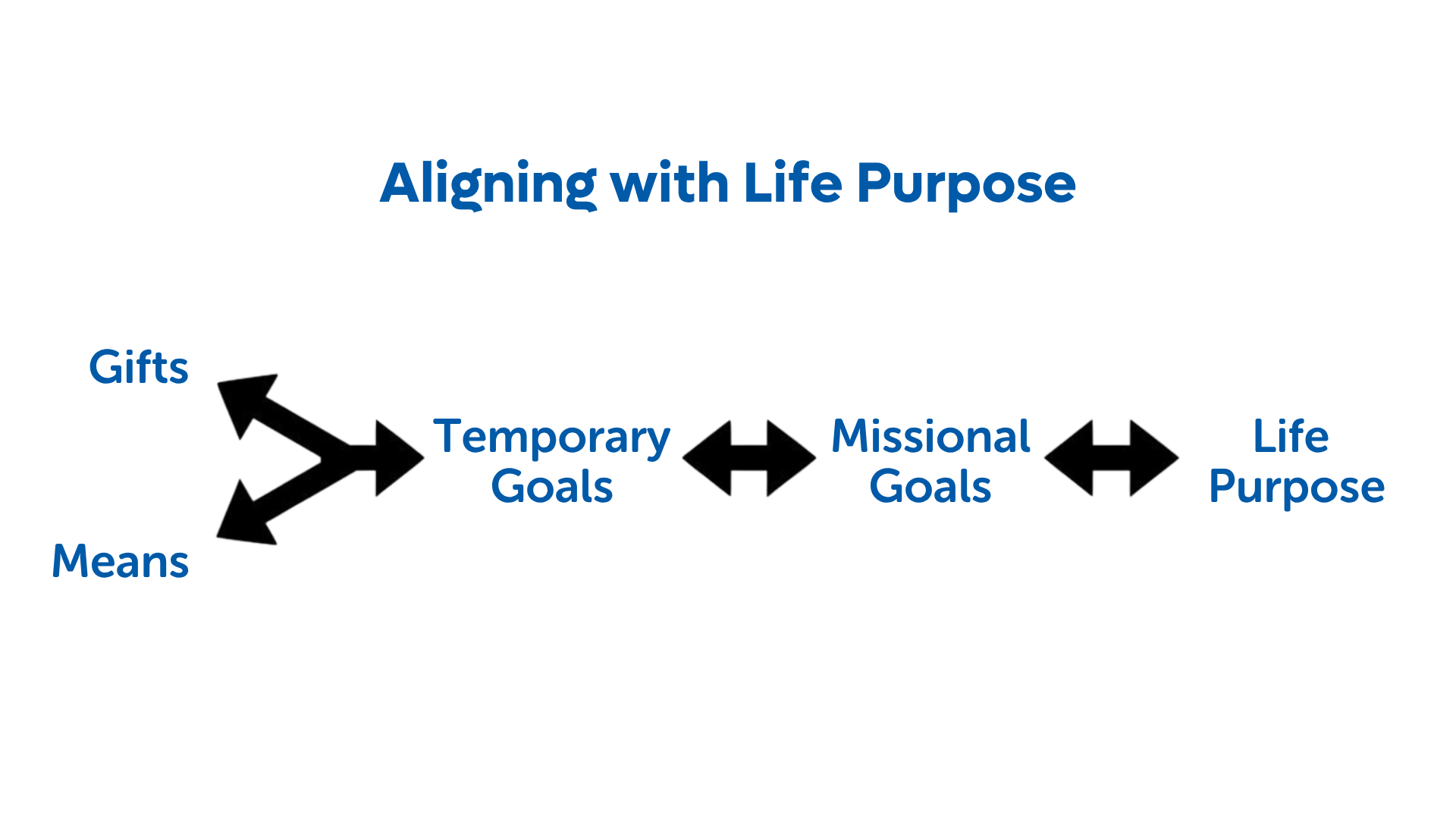
Here are three practical ways to receive your purpose.
1. All things are from Him and through Him - Everything is from God. We have nothing that we have not received from God. We can stop believing we deserve and earn some things — good and bad — based on things we do, because God provides everything. He made us and put us on earth at this time to serve His purposes. Everything about our work is from God — the good and the bad. He is in control of all things.
The ability to do anything is through Him. He made us fearfully and wonderfully with gifts appropriate for the work we are given to do. The ability to do all things comes through Jesus. Jesus says we could do no good thing without Him (John 15:5).
2. We can’t pay God back - He is not an investor or a boss. He has given us all things. We are unable to pay Him back, not just because of our finiteness, but also because God needs nothing. All things are already His!
He owns it all — including us. We can respond to His offer — His gift of purpose. We can be faithful with what we have been given and this leads to the most meaningful point.
3. All things are for God - God is the reason for everything and the reason to do anything. But we can’t fully understand all of His purposes, but He has made our purposes clear. We are made to glorify God. When our purpose is to glorify God we see opportunities to do this in the good things, the easy things, and even in the most challenging situations we face in our work.
Every moment is from God. The ability to do anything in the moment is through God. And the reason to do all of our work is for God.
Fully Receive your gift of purpose and reflect the glory of God.
Resources
Article: Why Do You Work? | Howard Graham
Article: Start With Why | Howard Graham
Article: A Good Job For Life | Howard Graham
Video: Why Work Matters | Tim Keller
Sermon: From God to God Through God | John Piper
Video: The Reason to Work | Howard Graham
Article: 5 Principles of Purposeful Leadership | Hubert Joly

Receive the Reason to Work
The better the reason for work, the more satisfying, meaningful, and fulfilling your work will be.
Reason is more than logic. Reason is purpose.
Simon Sinek has been telling us to find our “why” for almost two decades. Unfortunately, most people focus on what they’re doing and where they’re doing it instead of the reason for their work. Even worse, many people are working for the wrong reasons. All of this explains why employee engagement has shrunk to a 10 year low.
Poor Reasoning
In our own unofficial polling at The Center, we are finding dissatisfied workers are primarily working for two not so good reasons.
Work To Get - Many people believe their reason to work is "I do to get.” This causes people to believe one of the biggest philosophical lies on the planet which is “if it’s to be, it’s up to me.” Working for yourself to obtain money, benefits, status, flexibility, stability, or even work life balance leads to eventual frustration and burnout. No matter how successful you are because there’s never enough.
Have To - Other people put themselves in the “have to work” category. Of course, it’s true that people have practical realities to meet, families to feed, and bills to pay. People do need to work, but making that your chief reason for work leads to dissatisfaction, burnout, and often bitterness. Some people call this “working for the man” — whoever that is
You see, the reason you work is what you become a slave to. You are made for something greater than working to get or working because you have to. You are made to fulfill your purpose — you are made for glory.
Good Reason
To achieve satisfaction, people must work for a purpose that is bigger than themselves. A top executive leader who understands this well is Hubert Joly. Joly is the former Chairman and CEO of Best Buy. He has been recognized as one of the one hundred Best-Performing CEOs in the World by Harvard Business Review, and the co-author of The Heart of Business.
Joly understands what is needed in the fast-paced, complex, unpredictable, multichannel world in which we now live and work. In his article, 5 Principles of Purposeful Leadership, in Harvard Business Review, he says, “A company’s purpose is about far more than making money and gaining ground, the hard-charging, profit-optimizing hero-leader model has lost much of its appeal. An increasing number of employees now value authenticity and connection over a facade of strength and infallibility.”
For Joly, the purpose of a company must have something to do with serving people — employees and all who are touched by the company. He says, "You can see work as part of your fulfillment as a human being.” Then, he outlines five attributes — five “Be’s” — leaders should exemplify in order to lead the most high-performing companies.
Here is a summary of Joly’s 5 Principles of Purposeful Leadership with a quote from each of his main reasons.
1. Be clear about your purpose - “For corporate purposes to be successful, leaders themselves must first be clear about what drives them and the people around them.”
2. Be clear about your role - “A leader’s key role is to create energy and momentum — especially when circumstances are dire. It’s to help others see possibilities and potential, creating energy, inspiration, and hope.”
3. Be clear about whom you serve - “A fundamental element of purposeful leadership is to be clear about who you serve in your position, both during good and challenging times. As a leader, you must serve the people on the front lines, driving the business. You serve your colleagues. You serve your board of directors. You serve the people around you, by first understanding what they need to give their best so you can do your best to support them.”
4. Be driven by values - “Being driven by values is doing right, not just knowing or saying what’s right. A leader’s role is to live by these values, explicitly promote them, and make sure they’re part of the fabric of the business.”
5. Be authentic - “Being vulnerable and authentic does not mean offloading everything to your colleagues. For leaders, it means sharing emotions and struggles when appropriate and helpful to others.”
Joly explains really good reasons to work, but even these good reasons have their limits, they don’t ultimately satisfy. Working these reasons only last so long these reasons don’t acknowledge the source of all of life.
Ultimate Reason
Working for ultimate reasons is the only way to have lasting joy, fulfillment, and satisfaction. This reason to work is something you can earn. You can’t “do in order to get” this purpose. It’s also something you’re not going to feel a burden about having to do once you accept it.
The chief reason for work is offered to you for free. To obtain it you must receive it.
The God who made the universe made you and He calls you to follow Him and join Him in the very same work He is doing.
"Oh, the depth of the riches of the wisdom and knowledge of God! How unsearchable his judgments, and his paths beyond tracing out!
“Who has known the mind of the Lord? Or who has been his counselor?”
“Who has ever given to God, that God should repay them?”
For from him and through him and for him are all things.
To him be the glory forever! Amen" - [.no-reftag]Romans 11:33-36[.no-reftag]
These beautiful, poetic words are the ending to the 11 chapters in which the Holy Spirit, through the Apostle Paul, explains the ways of God in the letter to the Romans. There’s no more beautiful theology, nor is there a more practical description of the way — the ultimate reason — to approach life and work than from these verses.
Here are three practical ways to receive your purpose.
1. All things are from Him and through Him - Everything is from God. We have nothing that we have not received from God. We can stop believing we deserve and earn some things — good and bad — based on things we do, because God provides everything. He made us and put us on earth at this time to serve His purposes. Everything about our work is from God — the good and the bad. He is in control of all things.
The ability to do anything is through Him. He made us fearfully and wonderfully with gifts appropriate for the work we are given to do. The ability to do all things comes through Jesus. Jesus says we could do no good thing without Him (John 15:5).
2. We can’t pay God back - He is not an investor or a boss. He has given us all things. We are unable to pay Him back, not just because of our finiteness, but also because God needs nothing. All things are already His!
He owns it all — including us. We can respond to His offer — His gift of purpose. We can be faithful with what we have been given and this leads to the most meaningful point.
3. All things are for God - God is the reason for everything and the reason to do anything. But we can’t fully understand all of His purposes, but He has made our purposes clear. We are made to glorify God. When our purpose is to glorify God we see opportunities to do this in the good things, the easy things, and even in the most challenging situations we face in our work.
Every moment is from God. The ability to do anything in the moment is through God. And the reason to do all of our work is for God.
Fully Receive your gift of purpose and reflect the glory of God.
Resources
Article: Why Do You Work? | Howard Graham
Article: Start With Why | Howard Graham
Article: A Good Job For Life | Howard Graham
Video: Why Work Matters | Tim Keller
Sermon: From God to God Through God | John Piper
Video: The Reason to Work | Howard Graham
Article: 5 Principles of Purposeful Leadership | Hubert Joly