
Be Salt and Light
.png)
Be Salt and Light
Be Salt and Light
Be Salt and Light
There is a great advantage in being distinct. To be distinctive means to commit to differences and to be clear with everyone about what the differences are and the benefit they provide. Differentiation is critically important for organizations and individual leaders. What most sets you apart from common everyday work?
Stand out from the crowd!
Explain your differences!
Let them see the great work you are doing!
There is a great advantage in being distinct. To be distinctive means to commit to differences and to be clear with everyone about what the differences are and the benefits they provide.
Differentiation is critically important for organizations and individual leaders. What most sets you apart from common everyday work? What is your organization's key differentiation and how do you use it as an advantage?
Patrick Lencioni makes a case for organization health to be a part of a company’s key differentiation in his book The Advantage. “As more and more leaders come to the realization that the last frontier of competitive advantage will be the transformation of unhealthy organizations into healthy ones, there will be a shift in the mind-set of executives away from more technical pursuits and toward the disciplines [that lead to organizational health]…For the early adopters, the advantages that they will reap will be amplified as they achieve even greater differentiation from their lagging competitors.”
Healthy Culture Defined
What is needed most in our organizations and in our individual life and work is a focus on doing excellent work for others — coworkers and clients — with clear benefits that leads them to a better life.
“The only way to change culture is to create more of it.” - Andy Crouch, Culture Making
Those who follow Jesus already have a distinct advantage in creating a healthy culture. The call on the life of those who follow Jesus is to love others as they have been loved by God.
Here are the words of Jesus, after he explained to His followers that they would be rejected and persecuted.
“You are the salt of the earth. But if the salt loses its saltiness, how can it be made salty again? It is no longer good for anything, except to be thrown out and trampled underfoot.
“You are the light of the world. A town built on a hill cannot be hidden. Neither do people light a lamp and put it under a bowl. Instead they put it on its stand, and it gives light to everyone in the house. In the same way, let your light shine before others, that they may see your good deeds and glorify your Father in heaven.”- [.no-reftag]Matthew 5:13-16[.no-reftag]
Jesus is explaining to his followers the difference they can make if they will pour out what they have been given for the good of others and do works that not only influence others toward good, but to lead them to a better life.
Tim Keller says this about those who follow Jesus. “We are redeeming the culture that we're in, being salt in the culture, keeping the culture from decaying. We are to be light in the culture because we're lifting up the right way to be human as opposed to the wrong way to be human…it may seem countercultural but makes an enormous difference over time for the common good.”
For those who believe in Jesus these points are true not just in some parts of their life, but in all parts of their life — personal and family, neighborhood, civic, social, and especially in their work life where they likely spend the most time.
Choices
We are all faced with lots of choices. Two of the biggest are:
- Who will we follow? (Follow in a way that means surrender in other ways.)
- What kingdom are we building?
Every person is faced with hundreds of choices daily — especially at work. We all have to decide each time what will guide our decisions. Will we follow Jesus and join Him in building His kingdom or will we be trapped by the temporary kingdoms that lead to death?
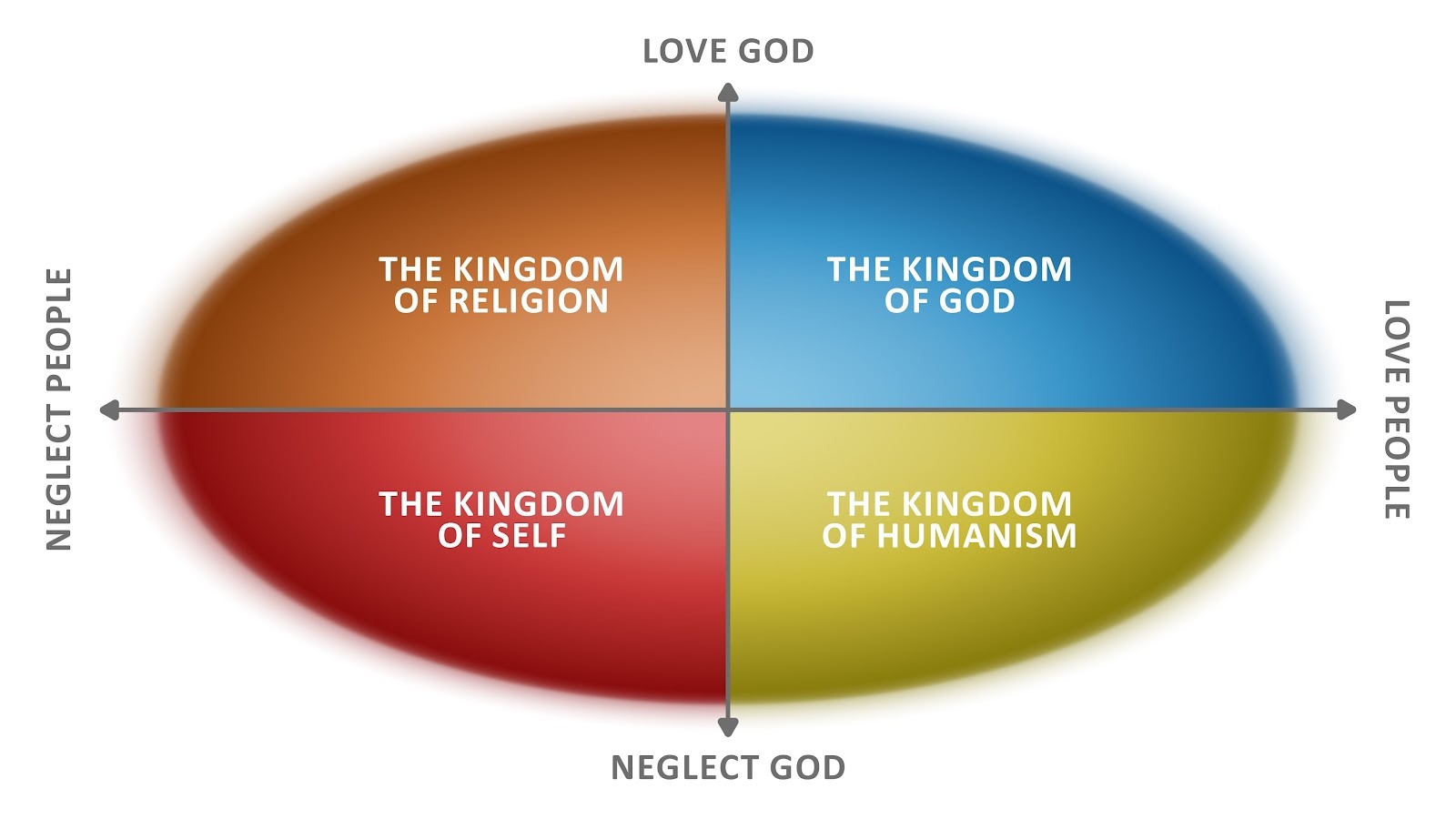
[.text-color-blue]The Kingdom of God[.text-color-blue] describes those who love God and love people. They seek first to build God’s kingdom on earth (Matthew 6:33) and realize all good things will be added to their life. This kingdom is full of people dispensing salt and being light.
[.text-color-blue]The Kingdom of Humanism[.text-color-blue] describes those whose choices prioritize people and perhaps even ethics first, but the solutions are temporary and lead to more separation from God because without salt and light of the Gospel there can be no life.
[.text-color-blue]The Kingdom of Self[.text-color-blue] describes those who choose complacency — just going along with the way things are. Or worse, they are only out for themselves doing their work to extract value from organization or from others. If this way of work goes unchecked, this kingdom exploits others for selfish gain.
[.text-color-blue]The Kingdom of Religion[.text-color-blue] describes those who choose discipline, even practices that should honor God, but because they do not care about people they show they don't truly love God either. Jesus says loving God means we will love people (John 15:12-13) and those who don't love people do not love God (1 John 4:20-21). This kingdom is also without salt and light and leads to death.
You might say, “This all seems too serious and that we all make good and bad decisions every day.” This is true, we all make mistakes, but we all have aims and these definitions are meant to help clarify your aims for all of life and work. To help you see where your salt and light are needed most.
Salt
Salt is an antiseptic. Salt is a preservative. Salt is a healer. Salt has many protective and restorative properties. Even a small amount of salt makes an enormous difference.
As salt, we can help stop the decline of work that is selfish and mutually manipulative. As salt, we can root out work that is performance-based and disciplined, yet without the love of Jesus.
As salt, we have the opportunity to focus our attention on people and reconcile relationships. Imagine working in an organization where everyone enjoyed each other and had the same goals. There would be no stopping the good they could do!
Salt makes culture!
Light
Light is truth. Light is an influence. Light removes darkness.
As light, we bring clarity and commitment to our work community and to those we serve. A shining city on a hill, is a great community seen for miles that is an example to all those who see it.
As light, we do good deeds that serve as the example for excellent work – showing how temporary sacrifices of self lead to the good of others and the organization as a whole.
Light influences people for good to do excellent work, that blesses others, and ultimately leads to Jesus!
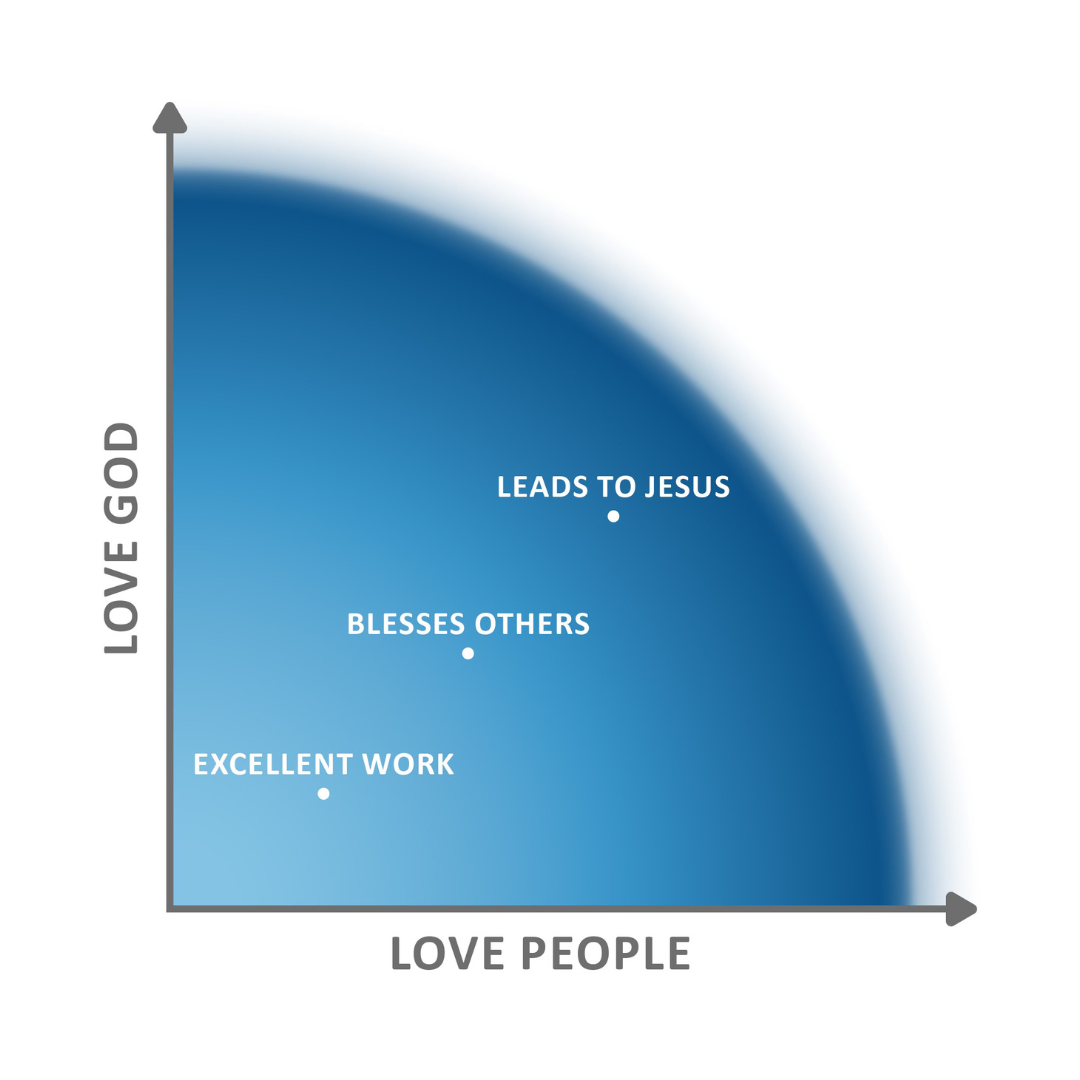
Be Salt
Heal, repair, and enhance what is good. Be a healer of what is broken — build a cohesive team.
- Actively reconcile relationships by — apologizing when you are wrong — without excuse. Sincerely accept the apology of others. Do the difficult work to heal broken relationships and help others identify their broken relationships and take steps to heal them.
- Build healthy relationships for the good of those you work with and serve by putting their needs first.
- Recognize systems that work against what is best for people and help repair them.
Be Light
Be a shining example of a better way to work — no more “me first”. Create clarity, point people to truth, shine light, and influence others for good.
- Actively care for others which will inspire others to do the same. Consider the needs of coworkers and customers before your own. Demand people’s best, don’t resist conflict, but embrace conflict for good.
- Actively prove it’s not about money for you and help the company make changes that put the good of others ahead of financial gain. Yes, of course the company has to make money to stay in business and do excellent work. Think of money in business as a human does blood — necessary for life but not the end goal.
- No more “me first.” Be innovative for others, create innovative products and services that change lives for the better.
Be salt and light by joining Jesus to change the word and build God’s kingdom on earth.
Resources:
Video: Receive Your Blessing – Accept Your Call | Howard Graham
Article: Making Culture | Howard Graham
Article: Make Winning Culture | Howard Graham
Sermon: Counter-Culture for the Common Good | Tim Keller
Book: Culture Making | Andy Crouch
Book: The Advantage: Why Organizational Health Trumps Everything Else In Business | Patrick Lencioni
Video: The Advantage of Distinctive Clarity at Work | Howard Graham
Stand out from the crowd!
Explain your differences!
Let them see the great work you are doing!
There is a great advantage in being distinct. To be distinctive means to commit to differences and to be clear with everyone about what the differences are and the benefits they provide.
Differentiation is critically important for organizations and individual leaders. What most sets you apart from common everyday work? What is your organization's key differentiation and how do you use it as an advantage?
Patrick Lencioni makes a case for organization health to be a part of a company’s key differentiation in his book The Advantage. “As more and more leaders come to the realization that the last frontier of competitive advantage will be the transformation of unhealthy organizations into healthy ones, there will be a shift in the mind-set of executives away from more technical pursuits and toward the disciplines [that lead to organizational health]…For the early adopters, the advantages that they will reap will be amplified as they achieve even greater differentiation from their lagging competitors.”
Healthy Culture Defined
What is needed most in our organizations and in our individual life and work is a focus on doing excellent work for others — coworkers and clients — with clear benefits that leads them to a better life.
“The only way to change culture is to create more of it.” - Andy Crouch, Culture Making
Those who follow Jesus already have a distinct advantage in creating a healthy culture. The call on the life of those who follow Jesus is to love others as they have been loved by God.
Here are the words of Jesus, after he explained to His followers that they would be rejected and persecuted.
“You are the salt of the earth. But if the salt loses its saltiness, how can it be made salty again? It is no longer good for anything, except to be thrown out and trampled underfoot.
“You are the light of the world. A town built on a hill cannot be hidden. Neither do people light a lamp and put it under a bowl. Instead they put it on its stand, and it gives light to everyone in the house. In the same way, let your light shine before others, that they may see your good deeds and glorify your Father in heaven.”- [.no-reftag]Matthew 5:13-16[.no-reftag]
Jesus is explaining to his followers the difference they can make if they will pour out what they have been given for the good of others and do works that not only influence others toward good, but to lead them to a better life.
Tim Keller says this about those who follow Jesus. “We are redeeming the culture that we're in, being salt in the culture, keeping the culture from decaying. We are to be light in the culture because we're lifting up the right way to be human as opposed to the wrong way to be human…it may seem countercultural but makes an enormous difference over time for the common good.”
For those who believe in Jesus these points are true not just in some parts of their life, but in all parts of their life — personal and family, neighborhood, civic, social, and especially in their work life where they likely spend the most time.
Choices
We are all faced with lots of choices. Two of the biggest are:
- Who will we follow? (Follow in a way that means surrender in other ways.)
- What kingdom are we building?
Every person is faced with hundreds of choices daily — especially at work. We all have to decide each time what will guide our decisions. Will we follow Jesus and join Him in building His kingdom or will we be trapped by the temporary kingdoms that lead to death?
[.text-color-blue]The Kingdom of God[.text-color-blue] describes those who love God and love people. They seek first to build God’s kingdom on earth (Matthew 6:33) and realize all good things will be added to their life. This kingdom is full of people dispensing salt and being light.
[.text-color-blue]The Kingdom of Humanism[.text-color-blue] describes those whose choices prioritize people and perhaps even ethics first, but the solutions are temporary and lead to more separation from God because without salt and light of the Gospel there can be no life.
[.text-color-blue]The Kingdom of Self[.text-color-blue] describes those who choose complacency — just going along with the way things are. Or worse, they are only out for themselves doing their work to extract value from organization or from others. If this way of work goes unchecked, this kingdom exploits others for selfish gain.
[.text-color-blue]The Kingdom of Religion[.text-color-blue] describes those who choose discipline, even practices that should honor God, but because they do not care about people they show they don't truly love God either. Jesus says loving God means we will love people (John 15:12-13) and those who don't love people do not love God (1 John 4:20-21). This kingdom is also without salt and light and leads to death.
You might say, “This all seems too serious and that we all make good and bad decisions every day.” This is true, we all make mistakes, but we all have aims and these definitions are meant to help clarify your aims for all of life and work. To help you see where your salt and light are needed most.
Salt
Salt is an antiseptic. Salt is a preservative. Salt is a healer. Salt has many protective and restorative properties. Even a small amount of salt makes an enormous difference.
As salt, we can help stop the decline of work that is selfish and mutually manipulative. As salt, we can root out work that is performance-based and disciplined, yet without the love of Jesus.
As salt, we have the opportunity to focus our attention on people and reconcile relationships. Imagine working in an organization where everyone enjoyed each other and had the same goals. There would be no stopping the good they could do!
Salt makes culture!
Light
Light is truth. Light is an influence. Light removes darkness.
As light, we bring clarity and commitment to our work community and to those we serve. A shining city on a hill, is a great community seen for miles that is an example to all those who see it.
As light, we do good deeds that serve as the example for excellent work – showing how temporary sacrifices of self lead to the good of others and the organization as a whole.
Light influences people for good to do excellent work, that blesses others, and ultimately leads to Jesus!
Be Salt
Heal, repair, and enhance what is good. Be a healer of what is broken — build a cohesive team.
- Actively reconcile relationships by — apologizing when you are wrong — without excuse. Sincerely accept the apology of others. Do the difficult work to heal broken relationships and help others identify their broken relationships and take steps to heal them.
- Build healthy relationships for the good of those you work with and serve by putting their needs first.
- Recognize systems that work against what is best for people and help repair them.
Be Light
Be a shining example of a better way to work — no more “me first”. Create clarity, point people to truth, shine light, and influence others for good.
- Actively care for others which will inspire others to do the same. Consider the needs of coworkers and customers before your own. Demand people’s best, don’t resist conflict, but embrace conflict for good.
- Actively prove it’s not about money for you and help the company make changes that put the good of others ahead of financial gain. Yes, of course the company has to make money to stay in business and do excellent work. Think of money in business as a human does blood — necessary for life but not the end goal.
- No more “me first.” Be innovative for others, create innovative products and services that change lives for the better.
Be salt and light by joining Jesus to change the word and build God’s kingdom on earth.
Resources:
Video: Receive Your Blessing – Accept Your Call | Howard Graham
Article: Making Culture | Howard Graham
Article: Make Winning Culture | Howard Graham
Sermon: Counter-Culture for the Common Good | Tim Keller
Book: Culture Making | Andy Crouch
Book: The Advantage: Why Organizational Health Trumps Everything Else In Business | Patrick Lencioni
Video: The Advantage of Distinctive Clarity at Work | Howard Graham