
Just Yes or No
.png)
Just Yes or No
Just Yes or No
Just Yes or No
It’s that simple! Say yes, when you mean it. Say no when you mean it. A person who has integrity believes the right things, speaks what they believe and follows through and doing the right things.
“The battle for truthfulness is fought in every little yes and no.” - Tim Keller
Which of these is worse? –
Say one thing and do another thing?
Say one thing and think or mean another thing?
Say one thing here and one thing there (the definition of politics)?
Saying something and using the credibility of a higher authority to convince an audience?
Most of us would agree, saying one thing and meaning another is the underlying problem of each of these. Sadly, versions of these are prevalent in our life and work everyday. All four of these are a different version of expressing true intention and manipulating others to serve an individual’s or organization’s purposes.
The Problems With Promises
I asked Claude, my AI assistant, to come up with a scenario where all the manipulations above were in play. Here is what it said,
“Imagine a manager who tells their team "the company values transparency" but then withholds information about layoffs they know are coming. They invoke company values to justify their decisions to employees while actually protecting themselves. Then they promise someone a promotion, say yes to it, but when budget cuts happen they quietly move on without following through. They're breaking their word, hiding behind corporate authority, saying one thing publicly while doing another privately—and all of it undermines the trust that actually makes a business work. The irony is that honest communication, even hard news, would have built more loyalty than the broken promises ever could.” - Claude AI Assistant
If Claude gets it in theory, we should understand it in practice. We’ve all seen this play out in the workplace far too often. This scenario fills the pages of our business news.
Wouldn’t it just be better if they said “yes” or “no”?
What about you? Do you want to become more clear and truthful?
The Purpose of Promises
Believe it or not, it is actually more loving to be clear, simple, and truthful to all of those you serve. Even more than that, it’s one of the most dignifying expressions of humanity to say what you mean and mean what you say. To make promises and keep them. This is more than just the right thing to do. This separates us from the animals.
Those of us who follow Jesus have a distinctive advantage when it comes to being clear and truthful in our communication. We know we represent Jesus in every single moment. We know every moment matters and that every moment for the purpose of honoring God and loving others. This makes the truth paramount all of the time — clear truth — without deemphasizing or emphasizing unnecessarily.
Jesus explains how to communicate with integrity this way:
“Again, you have heard that it was said to the people long ago, ‘Do not break your oath, but fulfill to the Lord the vows you have made.’ But I tell you, do not swear an oath at all: either by heaven, for it is God’s throne; or by the earth, for it is his footstool; or by Jerusalem, for it is the city of the Great King. And do not swear by your head, for you cannot make even one hair white or black.” - [.no-reftag]Matthew 5:33-36 [.no-reftag]
- Fulfill your vows to God- God knows all, hears all, and sees all. He made us and knows us better than we know ourselves. It is our responsibility to keep our intended promises to God. God made us so we are always His. God made time so every moment is His (Romans 11:36).
- Represent God- We are made in God’s image; designed to rule and subdue the Earth just as He calls us to do (Genesis 1:26-28). As followers of Jesus we represent Jesus. We are His disciples and brothers and sisters and friends of Jesus. We are children of God and coheirs with Jesus (Romans 8:17). We are commanded to do the very same work Jesus did (John 20:21-22).
- Don’t use God- We want to be very careful when making oaths or even when using God's name or word to back up our human point. This is especially problematic when we’re manipulating someone and using God’s word or credibility to do it.
“All you need to say is simply ‘Yes’ or ‘No’; anything beyond this comes from the evil one.- [.no-reftag]Matthew 5:37[.no-reftag]
It’s that simple! Say yes, when you mean it. Say no when you mean it. Every yes is a no to something else and every no is a yes to something else. It’s incredibly helpful to realize how simple this is.
In his sermon, Let Your Yes Be Yes, Tim Keller says, “The essence of truthfulness is sincerity and the essence of falsehood is deception. You can lie just as well by not saying anything at the right time… just as you can lie by telling the truth in a way that will not be believed. A person of integrity is a simple person, because what you say, what you do, what you think, and where you are, are all the same.”
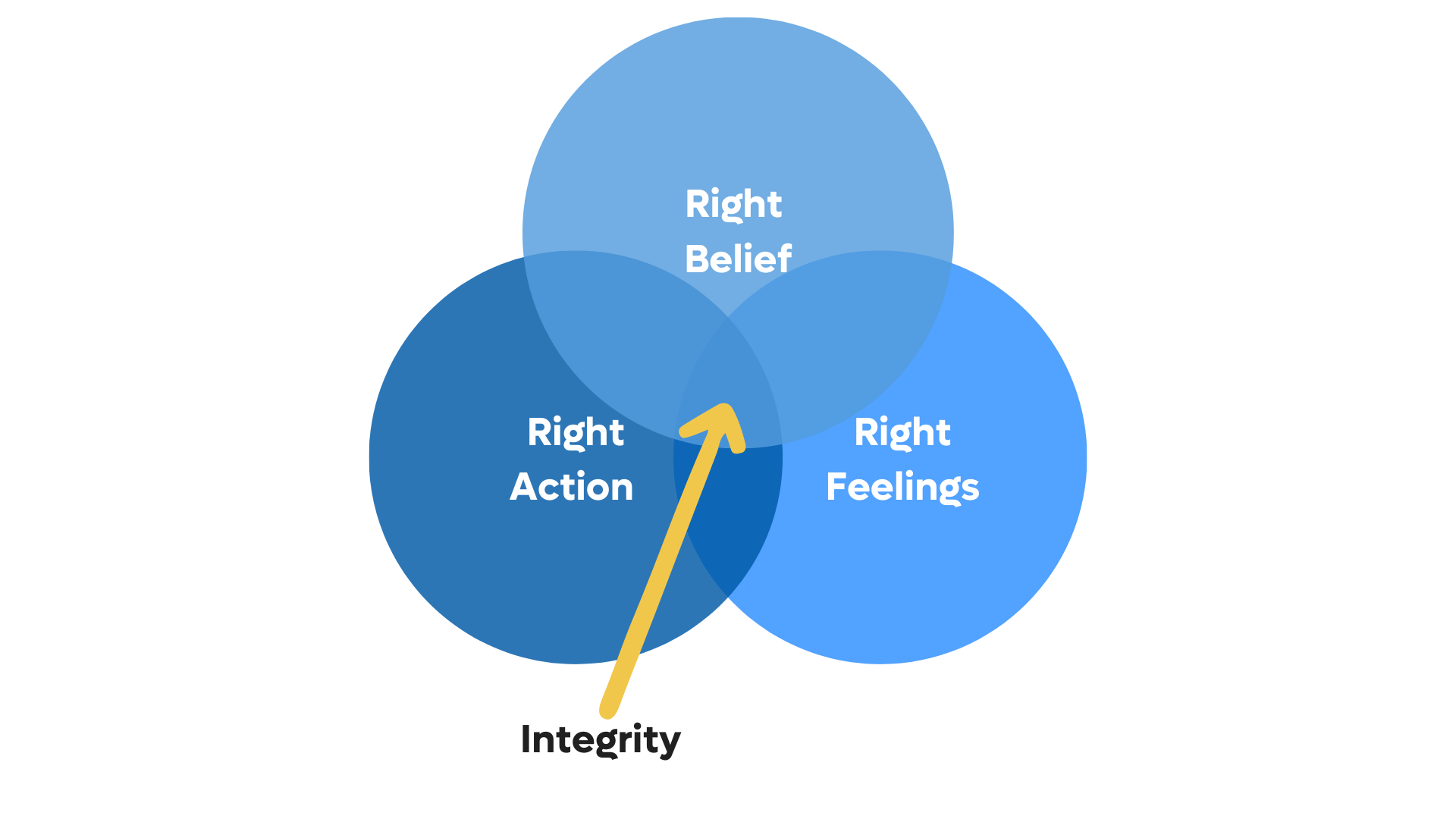
A person who has integrity believes the right things, speaks what they believe, follows through doing the right things. This means thinking and feeling are completely aligned with doing.
Keller explains how integrity is simple in three ways;
- A lack of simplicity is really duplicity- If we say one thing and do another, we are over complicating life and work for ourselves and for others. If I say and do the right thing, but don’t mean it, I’m making myself miserable.
- To lie is really complex- Someone who is lying has a hard time remembering what they said because they are convoluting everything. If you say what you mean and mean what you say it’s much easier to remember.
- To say different things is political- Someone who changes what they say to fit the audience or the situation is really just playing politics. This is another version of lying because it’s manipulative — not from the same source of truth.
The Practicality of Promises
Meaning what you say, doing what you say, and feeling good about what you say, has amazing practical power for everyday life and work.
In his 2001 essay in Christianity Today, Lewis Smedes provides great insight to how promises help us live out who we are made to be. Smedes makes a case for making and keeping promises to best live out who you are. Consider the practicality of these statements and how to implement them in your life and work.
- “We are largely who we become through making wise promises and keeping them.” Making promises and keeping them is the very highest definition of free will and human agency. Making promises and keeping them is one of the highest freedoms we have as humans. God gives us this agency and invites us to partner with Him in our work. "Some people still make promises and keep those they make. When they do, they help make life around them more stably human.”
- Promises create "an island of certainty.” When we make promises and keep them we’re not only building trust for ourselves we are also building a trust based community. The act of making and keeping promises allows those who experience our words and consistent actions to trust us and the organization. This empowers the entire community to do their best knowing they are working in a stable environment. This creates “a small sanctuary of trust within the jungle of unpredictability.”
- Promises are a “divine act.” Keeping promises reflects God's faithfulness. He viewed the act as bringing humans closer to being like God. For followers of Jesus, this is the way to live out our faith. This is the only way to work, because we work as representatives of the one who made us, loves us, saves us, and appointed us to do the very same work He did.
“Truth without love is not really truth. Love without truth is not really love.” - Tim Keller paraphrasing the Bible
Resources
Sermon: Let Your Yes Be Yes | Tim Keller
Video: Why Jesus Says Not to Swear Oaths | Bible Project
Article: The Power of Promising | Lewis Smedes
Article: Choose Opportunity – Choose Relationships First | Howard Graham
Article: Receive Your Blessing – Accept Your Call | Howard Graham
Document: Claude AI Summary
Video: The Advantage of Simple, Direct Communication | Howard Graham

“The battle for truthfulness is fought in every little yes and no.” - Tim Keller
Which of these is worse? –
Say one thing and do another thing?
Say one thing and think or mean another thing?
Say one thing here and one thing there (the definition of politics)?
Saying something and using the credibility of a higher authority to convince an audience?
Most of us would agree, saying one thing and meaning another is the underlying problem of each of these. Sadly, versions of these are prevalent in our life and work everyday. All four of these are a different version of expressing true intention and manipulating others to serve an individual’s or organization’s purposes.
The Problems With Promises
I asked Claude, my AI assistant, to come up with a scenario where all the manipulations above were in play. Here is what it said,
“Imagine a manager who tells their team "the company values transparency" but then withholds information about layoffs they know are coming. They invoke company values to justify their decisions to employees while actually protecting themselves. Then they promise someone a promotion, say yes to it, but when budget cuts happen they quietly move on without following through. They're breaking their word, hiding behind corporate authority, saying one thing publicly while doing another privately—and all of it undermines the trust that actually makes a business work. The irony is that honest communication, even hard news, would have built more loyalty than the broken promises ever could.” - Claude AI Assistant
If Claude gets it in theory, we should understand it in practice. We’ve all seen this play out in the workplace far too often. This scenario fills the pages of our business news.
Wouldn’t it just be better if they said “yes” or “no”?
What about you? Do you want to become more clear and truthful?
The Purpose of Promises
Believe it or not, it is actually more loving to be clear, simple, and truthful to all of those you serve. Even more than that, it’s one of the most dignifying expressions of humanity to say what you mean and mean what you say. To make promises and keep them. This is more than just the right thing to do. This separates us from the animals.
Those of us who follow Jesus have a distinctive advantage when it comes to being clear and truthful in our communication. We know we represent Jesus in every single moment. We know every moment matters and that every moment for the purpose of honoring God and loving others. This makes the truth paramount all of the time — clear truth — without deemphasizing or emphasizing unnecessarily.
Jesus explains how to communicate with integrity this way:
“Again, you have heard that it was said to the people long ago, ‘Do not break your oath, but fulfill to the Lord the vows you have made.’ But I tell you, do not swear an oath at all: either by heaven, for it is God’s throne; or by the earth, for it is his footstool; or by Jerusalem, for it is the city of the Great King. And do not swear by your head, for you cannot make even one hair white or black.” - [.no-reftag]Matthew 5:33-36 [.no-reftag]
- Fulfill your vows to God- God knows all, hears all, and sees all. He made us and knows us better than we know ourselves. It is our responsibility to keep our intended promises to God. God made us so we are always His. God made time so every moment is His (Romans 11:36).
- Represent God- We are made in God’s image; designed to rule and subdue the Earth just as He calls us to do (Genesis 1:26-28). As followers of Jesus we represent Jesus. We are His disciples and brothers and sisters and friends of Jesus. We are children of God and coheirs with Jesus (Romans 8:17). We are commanded to do the very same work Jesus did (John 20:21-22).
- Don’t use God- We want to be very careful when making oaths or even when using God's name or word to back up our human point. This is especially problematic when we’re manipulating someone and using God’s word or credibility to do it.
“All you need to say is simply ‘Yes’ or ‘No’; anything beyond this comes from the evil one.- [.no-reftag]Matthew 5:37[.no-reftag]
It’s that simple! Say yes, when you mean it. Say no when you mean it. Every yes is a no to something else and every no is a yes to something else. It’s incredibly helpful to realize how simple this is.
In his sermon, Let Your Yes Be Yes, Tim Keller says, “The essence of truthfulness is sincerity and the essence of falsehood is deception. You can lie just as well by not saying anything at the right time… just as you can lie by telling the truth in a way that will not be believed. A person of integrity is a simple person, because what you say, what you do, what you think, and where you are, are all the same.”
A person who has integrity believes the right things, speaks what they believe, follows through doing the right things. This means thinking and feeling are completely aligned with doing.
Keller explains how integrity is simple in three ways;
- A lack of simplicity is really duplicity- If we say one thing and do another, we are over complicating life and work for ourselves and for others. If I say and do the right thing, but don’t mean it, I’m making myself miserable.
- To lie is really complex- Someone who is lying has a hard time remembering what they said because they are convoluting everything. If you say what you mean and mean what you say it’s much easier to remember.
- To say different things is political- Someone who changes what they say to fit the audience or the situation is really just playing politics. This is another version of lying because it’s manipulative — not from the same source of truth.
The Practicality of Promises
Meaning what you say, doing what you say, and feeling good about what you say, has amazing practical power for everyday life and work.
In his 2001 essay in Christianity Today, Lewis Smedes provides great insight to how promises help us live out who we are made to be. Smedes makes a case for making and keeping promises to best live out who you are. Consider the practicality of these statements and how to implement them in your life and work.
- “We are largely who we become through making wise promises and keeping them.” Making promises and keeping them is the very highest definition of free will and human agency. Making promises and keeping them is one of the highest freedoms we have as humans. God gives us this agency and invites us to partner with Him in our work. "Some people still make promises and keep those they make. When they do, they help make life around them more stably human.”
- Promises create "an island of certainty.” When we make promises and keep them we’re not only building trust for ourselves we are also building a trust based community. The act of making and keeping promises allows those who experience our words and consistent actions to trust us and the organization. This empowers the entire community to do their best knowing they are working in a stable environment. This creates “a small sanctuary of trust within the jungle of unpredictability.”
- Promises are a “divine act.” Keeping promises reflects God's faithfulness. He viewed the act as bringing humans closer to being like God. For followers of Jesus, this is the way to live out our faith. This is the only way to work, because we work as representatives of the one who made us, loves us, saves us, and appointed us to do the very same work He did.
“Truth without love is not really truth. Love without truth is not really love.” - Tim Keller paraphrasing the Bible
Resources
Sermon: Let Your Yes Be Yes | Tim Keller
Video: Why Jesus Says Not to Swear Oaths | Bible Project
Article: The Power of Promising | Lewis Smedes
Article: Choose Opportunity – Choose Relationships First | Howard Graham
Article: Receive Your Blessing – Accept Your Call | Howard Graham
Document: Claude AI Summary
Video: The Advantage of Simple, Direct Communication | Howard Graham